Decima Spinal Protocol
Spinal Disc & Back Pain Protocol

Nothing has worked.
Here's the reason why.
And what's
actually different.

MSC stem cell injection for lumbar disc herniation, spinal stenosis, facet arthritis, and failed back surgery syndrome. Image-guided. Physician-supervised. We come to you.

From $7,500  · Home or clinic · No surgery required
Answer 6 questions
Physician reviews within 24 hours
Honest assessment — including if surgery is better
31M
Americans with chronic back pain at any given time — the most undertreated condition in medicine
40%
Of lumbar surgery patients experience persistent or new pain after surgery — this is called Failed Back Surgery Syndrome
0%
Blood supply to adult spinal discs — why they do not heal on their own, and why MSC injection changes this
6wk
Average duration of cortisone benefit — after which the underlying degeneration typically continues or accelerates
Why Treatments Fail

You've tried things.
They've helped
temporarily. Or not at all.

This is not because you haven't tried hard enough or found the right practitioner. It is because most available treatments address the symptom — inflammation, nerve compression, structural instability — without addressing the underlying biological environment that caused the problem and prevents it from healing. Here is what is actually happening in your spine.

The disc problem
Why your disc cannot heal itself — even with time and rest
Spinal discs in adults have virtually no direct blood supply. They receive nutrients through diffusion from adjacent vertebrae — a slow, inefficient process. When a disc is damaged, the cells that would normally repair it cannot receive the oxygen, growth factors, and immune signals they need to do their job. This is not a healing failure — it is a delivery failure. The repair materials cannot get there. MSC injection bypasses this by delivering regenerative cells directly into the disc tissue.
This is why rest alone never fully heals a disc injury
The cortisone problem
Why cortisone injections work for 6 weeks and then stop
Cortisone is a powerful anti-inflammatory. In the short term, it reduces the swelling around the nerve and the pain disappears. What most patients are not told: repeated cortisone injections accelerate cartilage breakdown and inhibit the fibroblasts and stem cells that would otherwise attempt to repair the tissue. The pain returns not just because the cortisone wore off, but because the structure is worse than before the injection. This is well-documented in orthopedic literature and almost never discussed in the room where you get the injection.
Cortisone reduces inflammation. It also slows repair.
The surgery problem
Why spinal surgery has a 20-40% failure rate — and it's not surgical error
Failed Back Surgery Syndrome is not a complication — it is a recognised clinical outcome affecting 20-40% of lumbar surgery patients. The surgery succeeds technically: the disc is removed, the nerve is decompressed, the fusion holds. But the pain persists or returns because surgery treats the structural problem without addressing the inflammatory and degenerative biological environment that caused it. You can remove a herniated disc. You cannot surgically restore the biological health of the spinal segment.
Surgery removes tissue. It cannot restore biology.
What Most Patients Don't Know

Four things your doctor
probably hasn't
told you.

These are not fringe claims. They are well-documented findings in orthopedic and regenerative medicine research that rarely make it into the 15-minute appointment where treatment decisions get made.

01
Adjacent segment disease — when surgery creates the next problem
When one spinal level is fused, the levels above and below it absorb the mechanical stress that the fused segment no longer distributes. Over 5-10 years, these adjacent levels degenerate at an accelerated rate. Many patients who had spinal fusion years ago and are now experiencing new back pain are experiencing this — not a recurrence of their original problem, but a predictable mechanical consequence of the surgery. MSC injection at the adjacent levels at the right time can address this before it becomes another surgical case.
→ Applies to anyone who has had a prior spinal fusion
02
The inflammatory cascade — why the pain spreads beyond the original injury
When a spinal disc is damaged, it releases pro-inflammatory cytokines — chemical signals that sensitise the surrounding nerve tissue. Over time, this sensitisation can expand beyond the original injury site, explaining why some patients develop pain in areas that imaging does not show structural damage. This central sensitisation is why treating the structural problem alone often does not fully resolve the pain. MSCs have documented immunomodulatory effects — they modulate the inflammatory environment rather than simply suppressing it with steroids.
→ Why your pain may be worse than your MRI suggests
03
Disc height restoration — what MSCs can do that surgery cannot
Degenerated discs lose height as the nucleus pulposus dries out and collapses. This height loss compresses the foramen — the opening through which nerve roots exit the spine — causing radicular pain. Surgery can decompress this by removing disc material, but it cannot restore disc height. In early and moderate degeneration, MSC injection has shown the ability to stimulate nucleus pulposus cells to restore hydration and — in some studies — disc height. This is not possible with any surgical or pharmaceutical intervention currently available.
→ Only regenerative intervention that can restore disc height
04
Why your MRI findings may not explain your pain — and vice versa
Studies consistently show that 30-40% of people with no back pain have disc herniations visible on MRI. And some patients with severe, disabling back pain have MRIs that look relatively normal. Structural findings and pain experience do not correlate as reliably as most patients are led to believe. This is why treating the image — the herniation, the stenosis, the Modic changes — without treating the biological environment often fails. Your pain is not simply the structural finding. It is the biological and neurological state of that tissue.
→ Why treating the MRI finding alone often isn't enough
Conditions We Treat

Specific spinal conditions
and what the evidence shows.

Lumbar Disc Herniation
The most common indication. MSC injection directly into the disc or periannular space. Strongest evidence in patients with single-level herniation who have not had prior surgery on that level. Results typically seen at 8-12 weeks.
Strongest evidence base
Degenerative Disc Disease
Multi-level or single-level disc degeneration with axial back pain. MSCs address the degenerative environment rather than the structural consequence. Best results in Pfirrmann Grade 2-4 degeneration.
Disc hydration & height focus
Facet Joint Arthritis
Intra-articular MSC injection into degenerated facet joints. Particularly relevant for patients whose pain is worse with extension and rotation — the classic facet pain pattern. Image-guided precision is essential.
Image-guided injection
Cervical Disc & Neck Pain
Upper and lower cervical disc herniation with or without radiculopathy. Requires precise fluoroscopic guidance and an experienced physician. We perform cervical injection at partner clinic settings only — not home visits.
Clinic setting required
Failed Back Surgery Syndrome
One of our strongest indications. Patients with persistent pain after technically successful spinal surgery. MSC injection addresses the biological environment the surgery could not. Particularly relevant for patients 2+ years post-surgery with no structural explanation for ongoing pain.
Strong indication — often helps when nothing else does
Adjacent Segment Disease
Degeneration at the spinal levels adjacent to a prior fusion. Often begins 3-7 years after lumbar fusion. MSC injection at the adjacent segments — before they reach surgical indication — may be the most effective intervention available for this condition.
Post-fusion patients: ask us about this
The Process

Three steps.
No waiting list.
We come to you.

From your first question to treatment. No unnecessary steps, no gatekeeping calls. A physician reads your case and contacts you within 24 hours.

1
Answer 6 questions
Tell us your diagnosis or symptoms, how long you've had them, what you've tried, and your location. Takes 3 minutes. No imaging required at this stage — share what you have if you have it.
3 minutes · No commitment
2
Physician reviews your case within 24 hours
A board-certified physician with specialisation in regenerative orthopedics reviews your intake personally. They contact you directly — by phone or secure message — to discuss your specific case, review any imaging you have, and give you an honest assessment including whether surgery may be the more appropriate path for your condition.
Within 24 hours · Real physician · Honest assessment
3
Image-guided injection — home, hotel, or clinic
If approved, your physician designs your protocol. GMP-verified MSC cells delivered directly. Ultrasound or fluoroscopic image guidance ensures precise delivery to the target tissue. Same-day procedure, 60-90 minutes total, 24-48 hour recovery. Biomarker follow-up panels at 30, 60, and 90 days.
Same-day procedure · Image-guided · Miami, LA, San Diego + other cities
Protocol Specification

What is actually
being injected and why it matters.

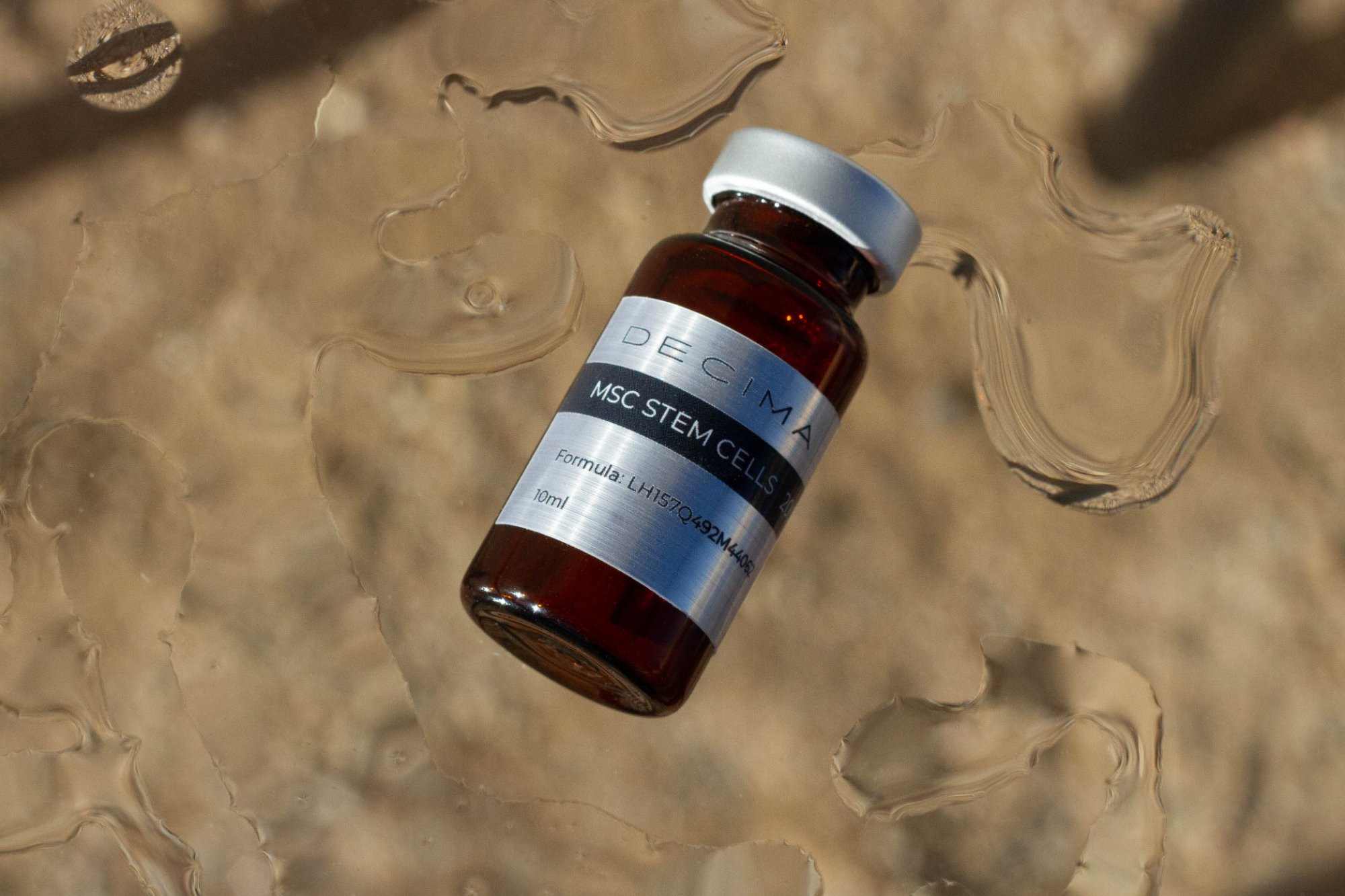
Not all MSC products are equivalent. The source, the purity, the viability, and the potency of the cells matter enormously for outcomes. Decima uses Wharton's Jelly MSCs — the highest anti-inflammatory potency MSC available — sourced from GMP-certified facilities and independently tested before every treatment. We share the lab certificate with every patient before their procedure.

For spinal protocols, cells are delivered under fluoroscopic or ultrasound guidance to ensure precise placement at the target tissue — disc, facet joint, or periannular space depending on your specific diagnosis. This precision is what separates a well-executed spinal injection from a poorly targeted one.

Standard Spinal Protocol
Wharton's Jelly MSC 50M · Image-guided · GMP Certified · LH157Q492M4405
Cell SourceWharton's Jelly · Umbilical Cord MSC
Cell Count50 Million cells (standard) · Higher doses available
Cell FormatFresh or cryopreserved · both available
Image GuidanceFluoroscopic or ultrasound · Every injection
TargetIntradiscal, periannular, or facet · Protocol-specific
AdministeringBoard-certified physician · Regenerative orthopedics
SettingHome, hotel, or partner clinic depending on level
Procedure time60–90 minutes total
Recovery24–48 hours limited activity
Follow-up30 / 60 / 90 day biomarker panels included
PriceFrom $7,500 · All-in · No hidden costs
Honest Eligibility

We will tell you if you're a strong candidate.
And if you're not.

Strong candidate
Disc herniation — single or multi-level — without prior surgery at that level
The strongest indication. Particularly if you have radiculopathy (leg or arm pain), if cortisone has provided temporary relief, or if you have been recommended surgery and want an alternative first.
Strong candidate
Failed back surgery syndrome — persistent pain 2+ years after technically successful surgery
One of our most consistent outcomes. If your surgery was technically successful but pain persists or returned, MSC injection addresses the biological environment the surgery could not restore.
Good candidate
Post-fusion adjacent segment degeneration — new pain 3-7 years after lumbar fusion
The adjacent level problem is predictable and progressive. MSC injection at the affected levels before they reach surgical indication is often the most effective available intervention.
Good candidate
Facet arthritis and chronic axial back pain with no radiculopathy
Intra-articular facet injection with MSCs. Best results in patients whose pain is clearly positional — worse with extension and rotation — and who have had temporary relief from diagnostic facet blocks.
Likely not a candidate
Grade 4 spinal stenosis with severe neurological compromise
When stenosis is severe enough to cause significant weakness, loss of bladder or bowel control, or rapidly progressing neurological deficit, surgical decompression is the appropriate first intervention. We will tell you this directly.
Needs further evaluation
Active infection, recent cancer, or on immunosuppressants
Certain medical conditions affect eligibility and safety. Your physician will review your complete history before any recommendation. If the answer is no, you will know why.
Patient Outcomes

What patients who've been through
everything else say about this.

★★★★★

“I had L4-L5 microdiscectomy in 2019. Pain came back in 2021. Three more epidurals, two more opinions. Decima explained why the surgery hadn't fixed it in a way no one else had — and the injection gave me 70% reduction in six weeks.”

Robert A.
Failed Back Surgery · Dallas, TX
★★★★★

“Seven years of chronic back pain. Four cortisone injections that each worked for about a month. Decima told me on the call that the cortisone was probably making things worse long-term — my physio had hinted at it but no one said it directly. Honest and helpful.”

Patricia L.
Lumbar DDD · Miami, FL
★★★★★

“I had L3-4 fusion in 2018. Started getting new pain at L4-5 in 2023. My spine surgeon said it was adjacent segment disease and suggested another fusion. Decima treated L4-5 with MSC injection instead. It has been fourteen months and I have not had a second surgery.”

David M.
Adjacent Segment Disease · Los Angeles, CA

Individual results vary. These are patient-reported outcomes. Stem cell therapy is investigational and outcomes are not guaranteed. Results depend on the individual, condition, protocol, and other factors.

Check Your Eligibility

6 questions.
An honest answer
in 24 hours.

Tell us about your spine. A board-certified physician reviews your specific case and contacts you within 24 hours — including whether surgery or another intervention is more appropriate than MSC injection for your situation. No pressure. No commitment at this stage.

Takes 3 minutes
Physician reviews your specific diagnosis — not a generic call
We will tell you if surgery is the better option for your case
Available in Miami, LA, San Diego and other US cities
No payment required to check eligibility
What is your primary spinal condition?
Select the one that best describes your situation
Disc herniation — lower back (lumbar)
Disc herniation — neck (cervical)
Degenerative disc disease — chronic back pain
Spinal stenosis
Pain after prior spinal surgery — it didn't fully work
New pain near a prior spinal fusion
Facet joint arthritis or SI joint pain
Unsure of diagnosis — chronic back or leg pain
1 of 6
Have you had spinal surgery before?
This significantly affects your protocol design
No — no prior spinal surgery
Yes — discectomy or decompression, some improvement
Yes — surgery helped temporarily but pain returned
Yes — surgery made no significant difference
Yes — spinal fusion (one or more levels)
2 of 6
How long have you had this condition?
Duration and trajectory matter for prognosis
Less than 6 months — recent onset or injury
6 months to 2 years
2 to 5 years
More than 5 years — chronic, tried many things
3 of 6
What treatments have you already tried?
Select all that apply — this helps us understand your treatment history
Physical therapy — multiple courses
Cortisone or epidural steroid injections
Nerve blocks or radiofrequency ablation
Chiropractic or manual therapy
PRP injection
Pain management programme or pain clinic
Nothing yet — this is my first step
4 of 6
Where are you located?
We match you to the nearest physician in our network
Miami / South Florida
Los Angeles / San Diego / California
New York / Tri-state area
Dallas / Texas
Other US city — I can travel if needed
International
5 of 6
Where should your physician reach you?
A real physician contacts you within 24 hours. Not a bot. Not a call centre.
6 of 6
You're in.

A board-certified Decima physician will review your spinal case and contact you within 24 hours. They will give you an honest, specific assessment of whether MSC injection is the right next step for your condition.

If you have imaging — MRI or X-ray — send it to info@decimastemcells.com with your name so your physician can review it before they call.